
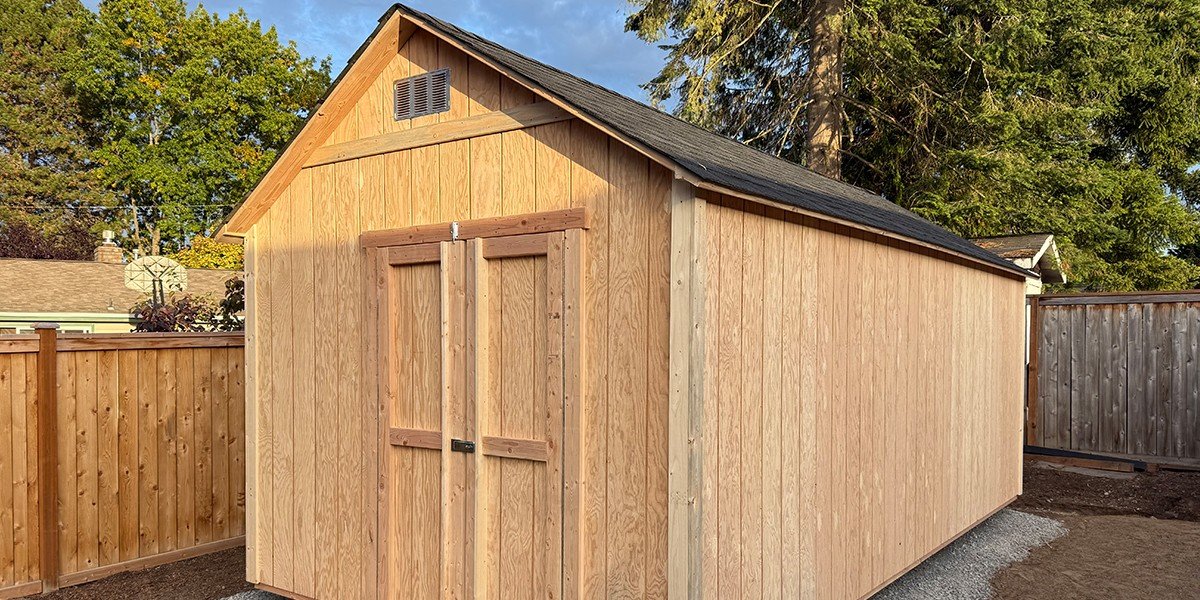
A brand new shed sits perfectly level the day it goes up. Fast forward eight months, through one soggy Washington winter, and the door won’t latch anymore. The frame twisted just slightly. Nobody dropped anything on it, nobody moved it, and the shed itself did nothing wrong. The ground underneath it moved instead, and the shed just went along for the ride.
That’s the part almost nobody thinks about when they’re picking out a shed. They spend weeks comparing siding colors and roof styles, then treat the actual ground as an afterthought, something you deal with the morning of delivery instead of something you plan for weeks ahead. That order of operations causes more problems than any other single mistake in backyard shed projects across this state.
Why Washington’s Ground Behaves Differently Than People Expect
Western Washington sits on a mix of glacial till, compacted silty soil, and, in low-lying spots, actual peat left behind from old wetlands. None of that sounds like it matters until rain hits it for six straight months. Clay-heavy soil soaks up water like a sponge, swells during the wet season, then shrinks back down once things dry out. That constant swelling and shrinking pushes and pulls on anything sitting on top of it, foundations, decks, and yes, sheds included.
A shed built directly on bare dirt, or worse, on a patch of lawn that looked flat enough at a glance, ends up riding that seasonal movement every single year. The shed doesn’t need to move far to cause real damage. A quarter inch of shift on one corner throws doors out of alignment, cracks a floor seam, or opens a gap where water starts working its way in.
The Drainage Problem Hiding Under Every Backyard
Rain doesn’t just fall on Washington. It sits there for months at a time. Standing water around a shed’s base does more damage over a winter than almost anything else, softening the ground until it can’t support weight evenly anymore. Once one section of ground gets soft while the rest stays firm, the whole structure above it starts settling unevenly. That’s when a level floor turns into a floor with a noticeable slope, and once that starts, it rarely reverses on its own.
Most reputable backyard shed companies in Washington check drainage before they check anything else about a site, because a good foundation on badly draining ground still fails eventually. Grading the site so water actually flows away from the structure, rather than pooling right at its base, solves a problem that no amount of quality lumber or roofing can fix after the fact.
Frost Heave Is a Real Threat Here Too
People associate frost heave with places that get brutally cold, but Western Washington sees it too, especially where soil holds a lot of moisture heading into a cold snap. Water trapped in soil freezes, expands, and pushes upward, and if a foundation isn’t built to handle that movement, it lifts unevenly right along with the ground underneath it.
This is exactly why foundation type matters so much more than most people realize when they’re shopping around. A gravel pad handles drainage well and works fine for a lot of storage sheds, but a heavier structure, or one going on ground with a lot of clay content, might need a foundation designed specifically to resist that seasonal push and pull.
What a Good Foundation Actually Involves?
A solid shed foundation starts with clearing and leveling the site properly, not just eyeballing it flat. From there, a layer of compacted gravel creates drainage underneath the structure, giving water somewhere to go instead of pooling directly beneath the floor. Depending on the shed’s size and the ground it’s sitting on, that might mean a full gravel pad, a set of concrete piers, or a more substantial poured slab for anything heavier or larger.
Skipping any of these steps to save a weekend of prep work tends to cost a lot more later, once a door won’t close right or water starts creeping in through a gap that wasn’t there the first year. Backyard shed builders in Orting deal with this exact scenario constantly, since the area’s mix of clay-rich soil and steady rainfall creates precisely the conditions that punish a rushed foundation the hardest.
Why Local Knowledge Actually Matters Here?
Not every part of Washington has the same soil, and that difference matters more than most buyers assume going in. A foundation plan that works fine in a sandy, well-draining lot on the east side of the state can fail within a year on heavier clay soil closer to the mountains. Backyard shed companies in Washington that have actually built across different parts of the region tend to know which foundation approach fits which type of ground, rather than defaulting to the same setup everywhere regardless of the site.
That local experience shows up in small decisions that add up to a big difference over time. How deep does the gravel base need to go? Which direction should the grading slope? Whether a particular yard needs a more substantial foundation because of how the water tends to collect after a heavy rain. None of that comes from a catalog. It comes from having actually built sheds on the ground, just like it did before.
What This Actually Costs Versus What It Saves
A gravel pad foundation typically costs a few hundred dollars in materials and a weekend of labor, depending on shed size. A poured concrete slab runs quite a bit more, often several times that, but it holds up better under heavier sheds or on ground that shifts more than average. Compare either of those numbers against the cost of repairing a shed with a warped floor, a stuck door, or water damage working its way up from a soggy base, and the math tips heavily toward doing it right from the start.
That’s not a sales pitch. It’s just how the numbers actually work out once someone’s dealt with both scenarios. A homeowner who skips a proper foundation to save four hundred dollars upfront often ends up spending two or three times that amount a few years later, tearing out a damaged floor or releveling a structure that’s already settled unevenly. The foundation is the one part of a shed project where cutting corners rarely pays off the way it seems like it will in the moment.
Getting It Right the First Time
A shed foundation isn’t the exciting part of the project, and it’s easy to see why people rush past it to get to the fun stuff, picking colors, choosing windows, deciding on a porch. But everything built on top of a shaky foundation eventually shows it, usually right around the time a homeowner least expects it, a full winter or two down the road.
Backyard shed builders in Orting who take the ground seriously from day one save their customers from exactly that outcome. A little extra time spent on gravel, grading, and drainage before the walls ever go up is the difference between a shed that still opens and closes smoothly five years later and one that’s already showing cracks by the second winter.
The shed itself gets all the attention in the planning stage. The ground underneath it does all the work once the project is finished. Getting that part right the first time means never having to think about it again, which is exactly the point.