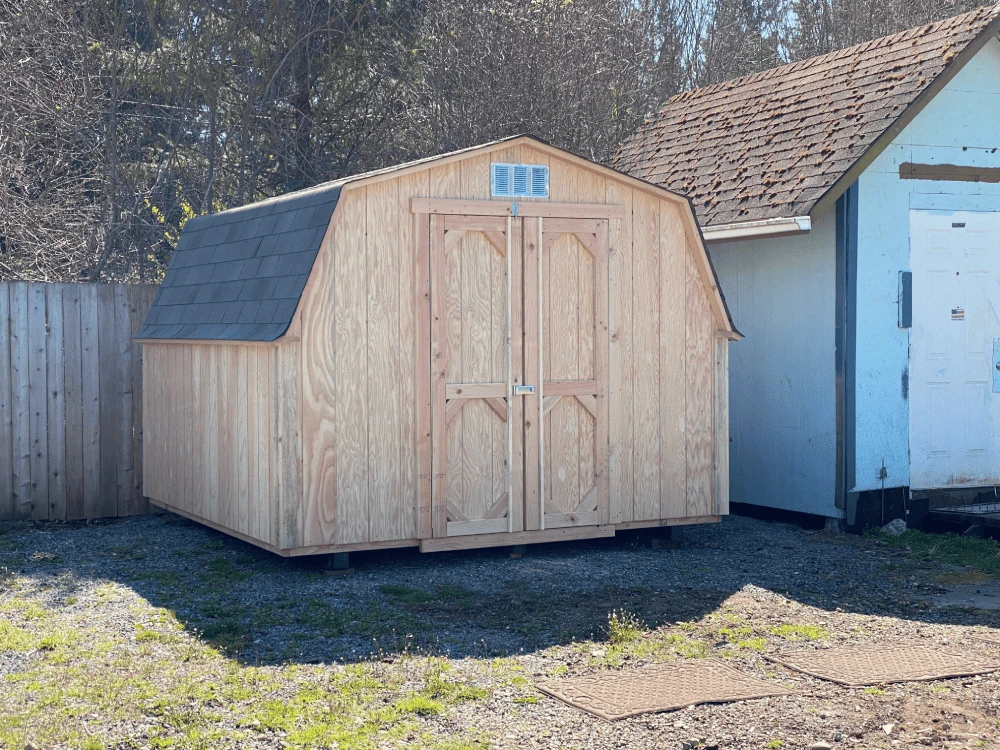
Outdoor storage sheds wood are permanent backyard structures designed to protect tools, equipment, and seasonal items using natural lumber as the primary framing and exterior material. When properly built and installed, they outperform lightweight metal or resin alternatives in durability, insulation performance, repairability, and long-term value. The difference between an average shed and one that lasts 25 years comes down to lumber grade, foundation preparation, ventilation strategy, moisture management, and installation method. Understanding those variables is what separates impulse purchases from sound investments.
At Northwest Sheds, we build and install these structures every week across Washington. Over time, clear patterns emerge. Buyers often focus on size and price first. Experienced carpenters focus on structure and ground conditions first. That difference shapes the entire outcome.
Srategic Overview: What This Guide Covers
- Structural Anatomy of Wooden Storage Sheds
- Material Quality and Why It Determines Lifespan
- Foundation Systems in Wet Pacific Northwest Conditions
- Ventilation, Moisture Control, and Mold Prevention
- Comparing the best wooden garden sheds by Build Type
- Common Buyer Misconceptions We See in the Field
- Cost Logic and Long-Term Ownership Value
Structural Anatomy: What Makes a Wooden Shed Durable
Most backyard shed failures trace back to structural shortcuts.
A properly engineered wooden shed includes:
- Pressure-treated floor joists rated for ground proximity
- 16-inch on-center wall framing
- Sheathing with structural thickness
- Roof pitch appropriate for regional snow and rain loads
- Weather-resistant siding with sealed seams
Many pre-fabricated units reduce material thickness to hit lower price points. That saves money upfront but introduces flexing, door misalignment, and early rot.
In Washington’s climate, structural rigidity is not optional. Moisture cycles expand and contract wood year-round. A stable frame absorbs that movement without compromise.
We frame our sheds like small buildings, not like oversized cabinets.
Material Quality: The Silent Differentiator
The phrase outdoor storage sheds wood gets used broadly, but wood is not one uniform category.
Here are key distinctions that matter:
Lower-grade materials will function for storage. Higher-grade materials protect structural integrity under Northwest weather pressure.
The buyers who choose premium materials usually plan to stay in their homes longer. The shed becomes part of the property value equation, not just temporary storage.
Foundations in the Pacific Northwest: Where Many Sheds Fail
In Washington, ground conditions are often damp, uneven, or clay-heavy.
A wooden shed placed directly on soil will fail. That is not opinion. It is timeline math.
We use three common base systems:
- Compacted gravel pad with treated skid base
- Concrete pier blocks with leveled framing
- Full concrete slab for heavy-use applications
Gravel pads are the most cost-effective and adequate for most backyard storage needs. The key is depth and compaction. Surface gravel alone is not enough.
Buyers often underestimate drainage. A shed that sits in pooling water during winter will show floor rot within five years.
The foundation is invisible once installed. It is also the part that determines longevity.
Ventilation and Moisture: The Overlooked Variable
Even well-built sheds fail without airflow.
Warm air trapped inside meets cooler exterior walls and condensation forms. Over time that leads to mold growth and internal rot.
Every quality wooden shed should include:
- Roof vents or ridge vents
- Soffit ventilation
- Slight floor elevation for airflow beneath
This matters especially if you store power tools, lawn equipment, or gardening chemicals.
The best wooden garden sheds balance airtight weather protection with passive ventilation. Too sealed, and moisture builds up. Too open, and weather enters.
There is a balance, and it is climate-specific.
Build Type Comparison: On-Site vs Pre-Built Delivery
In urban and suburban Washington neighborhoods, on-site builds often make more sense due to fences, trees, and elevation changes.
Transported sheds can twist slightly during delivery, especially larger models. On-site builds eliminate that stress.
We guide clients through that decision based on layout and ground conditions, not just convenience.
Common Misconceptions We Regularly Correct
- “All wooden sheds are basically the same.”
They are not. Framing thickness, siding quality, floor strength, and installation practices vary dramatically.
- “Metal sheds last longer.”
In dry climates, maybe. In damp Northwest conditions, untreated metal interiors rust, and condensation can be severe without insulation.
- “Bigger is always better.”
Oversized sheds can create unused space, higher material costs, and in some cities, permit complications.
Function matters more than square footage.
Cost Logic: How to Think Long Term
A lower-priced wooden shed may cost 20 percent less upfront.
But if it requires structural reinforcement, siding replacement, or early floor repair within 7 to 10 years, the ownership cost rises quickly.
A properly built wooden shed in Washington should stay in peak condition:
- 20 to 30 years with maintenance
- 10 to 15 years with minimal upkeep
The upfront price difference often equates to a few hundred dollars per year over its lifespan.
When viewed annually, structural quality becomes the more rational choice.
Emerging Trends in Wooden Shed Demand
We are seeing three consistent patterns:
- Backyard workspace conversions
- Storage for electric landscaping equipment
- Multi-use garden and hobby structures
Remote work has increased demand for insulated shed models. Simple storage sheds now require electrical planning and wall finishing support.
The market is shifting from “tool box” to “micro-structure.”
Builders who ignore that shift will struggle long term.
Final Perspective
Outdoor storage sheds wood are small structures, but the decisions behind them are not small. Material quality, foundation depth, ventilation planning, and installation method determine whether a shed becomes a long-term asset or a short-term expense.
The strongest sheds are not defined by appearance alone. They are defined by structure, climate awareness, and execution discipline.
When buyers understand those principles, the decision becomes clear and durable.
Frequently Asked Questions
[sp_easyaccordion id=\”1820\”]