Why Storage Solutions in Western Washington Require Custom Thinking
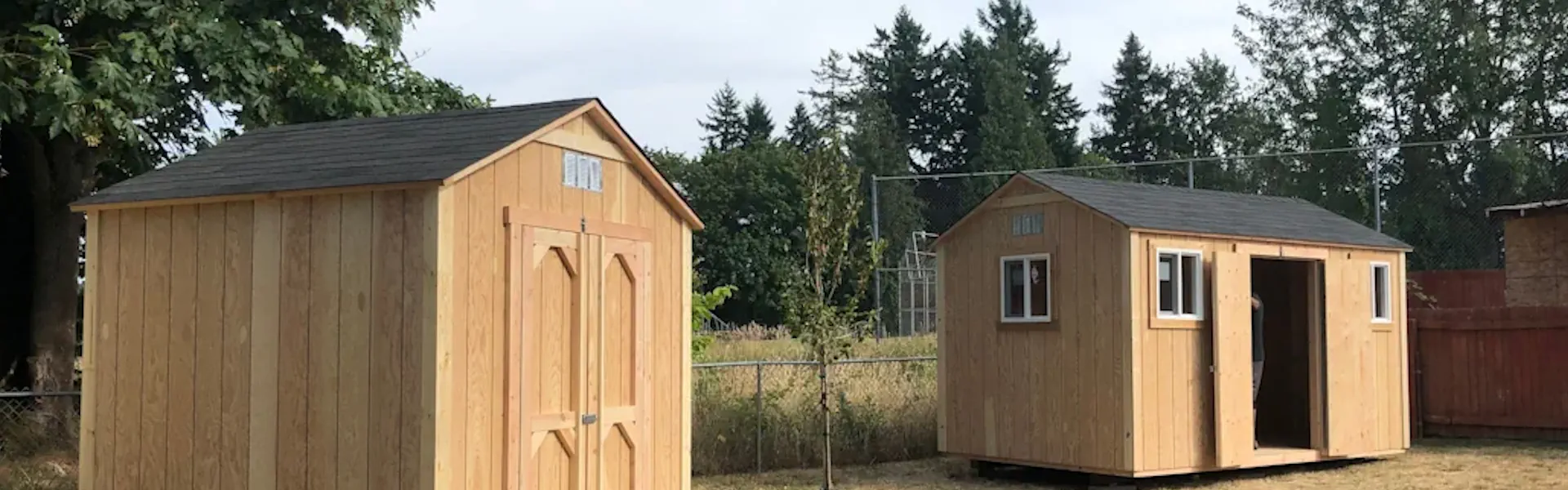
Finding reliable custom wood storage sheds in Western Washington is rarely just about adding space. It is about solving for moisture, terrain, and long-term usability in a region where outdoor structures are constantly exposed to damp conditions and shifting ground. Standard options often fail to account for these variables.
At Northwest Sheds, we have seen that when storage is designed around the property rather than forced into it, the outcome changes. A shed becomes more than storage. It becomes a stable, functional extension of how the space is used every day.
Why Custom Wood Storage Sheds Matter in Western Washington Conditions
Western Washington presents a unique environment for outdoor structures. Persistent rainfall, shaded lots, and soil variability create conditions that expose weaknesses quickly.
We have found that custom wood storage sheds address these challenges more effectively than standardized builds. Customization allows each structure to respond to the specific characteristics of the property.
Key realities we consistently account for:
- Moisture exposure is ongoing, not seasonal
- Soil conditions vary significantly, even within the same neighborhood
- Space constraints often require precise placement
Experiences like this reveal something broader about the industry. Many solutions prioritize speed and availability, yet overlook how environmental factors shape long-term performance. The result is often a structure that works initially but requires ongoing adjustments.
How Climate and Property Layout Influence Shed Performance
Across areas like Seattle, Tacoma, Olympia, and surrounding communities, property conditions differ in ways that directly affect shed performance.
At Northwest Sheds, we begin by evaluating how each site behaves. A Washington shed construction company cannot rely on assumptions. The land itself determines how the structure should be built.
Important factors include:
- Drainage patterns after consistent rainfall
- Sunlight exposure, especially in tree-dense areas
- Ground slope and stability
In more open areas, larger footprints become feasible. This is where large wooden storage buildings come into play, offering expanded functionality without compromising structural integrity.
Viewed from a broader perspective, location-specific awareness consistently separates structures that endure from those that deteriorate.
What Happens When a Shed Is Forced Into a Space without Customization?
One of the most common patterns we have observed is the attempt to fit a standard shed into a space that was never designed for it. At first, the compromise feels minor. The structure fits, the storage problem seems solved, and the process appears efficient.
Over time, the limitations begin to surface.
Common outcomes include:
- Uneven placement due to slope or soil variation
- Water pooling around the base during prolonged rain
- Restricted access because of poor orientation
- Underutilized interior space due to mismatched layout
These issues rarely appear immediately. They develop gradually, often becoming noticeable only after a full season of use.
Experiences like this reveal something broader about the industry. Many solutions are designed for convenience and speed, not for alignment with real-world conditions. The result is a structure that technically fits, but functionally underperforms.
In contrast, custom wood storage sheds are designed with the space in mind from the beginning. This shifts the process from adjustment to alignment, reducing friction over time and allowing the structure to function as intended.
A Practical Framework for Designing Long-Lasting Wood Structures
Understanding what makes a shed durable requires moving beyond surface features. Over time, we have developed a framework that reflects how well a structure will perform.
- Material Integrity
- Solid wood construction with no particle board
- Framing designed for long-term load-bearing use
- Materials selected for moisture resistance
- Roofing and Weather Protection
- Self-sealing shingles in black, brown, or grey
- Roof design that supports consistent runoff
- Reduced risk of leaks and internal dampness
- Structural Adaptability
- Ready-to-paint surfaces for environmental integration
- Flexible layouts that evolve with storage needs
- Compatibility with different property configurations
Professionals often notice subtle details that make all the difference. In practice, it is the interaction between these elements that determines whether a shed remains stable over time.
When Large Wooden Storage Buildings Become Functional Assets
The role of sheds is evolving. What was once a basic storage solution is now being redefined as a functional extension of the property?
We have seen large wooden storage buildings used in ways that go beyond traditional storage:
- Workshop spaces for tools and equipment
- Organized areas for seasonal items
- Dedicated zones for hobbies or small projects
This shift reflects a broader change in how homeowners view outdoor space. Instead of treating sheds as temporary solutions, they are being integrated into long-term planning.
Experiences like this reveal something broader about the industry. Many assume that increasing size is the primary solution. In reality, functionality comes from how well the space is designed and used.
Making Informed Decisions around Custom Shed Construction
Choosing between standard and custom solutions often comes down to understanding long-term implications. A shed that fits the space today may not meet future needs.
At Northwest Sheds, we approach this decision with a focus on alignment. Alignment between structure, environment, and intended use.
Key considerations include:
- Whether the design reflects actual storage requirements
- How materials will perform over time in local conditions
- If the structure can adapt as needs change
Over time, a clear trend emerges across the industry. Homeowners are moving toward more deliberate decisions. They are prioritizing durability and usability over convenience.
This shift is particularly evident in the growing demand for custom wood storage sheds, where flexibility and long-term performance are valued more than quick installation.
Build for How the Space Will Be Used Tomorrow
Storage decisions often begin with immediate needs. Over time, those needs evolve, and the structure must keep up.
At Northwest Sheds, we have seen that custom wood storage sheds offer a level of adaptability that standard options rarely match. When designed thoughtfully, they support not just current storage, but future use as well.
The takeaway is straightforward. A shed should not just solve today’s problem. It should continue to function as the space around it changes. When construction is approached with that mindset, the result is a structure that remains relevant and reliable over time.
FAQs
[sp_easyaccordion id=\”1856\”]